


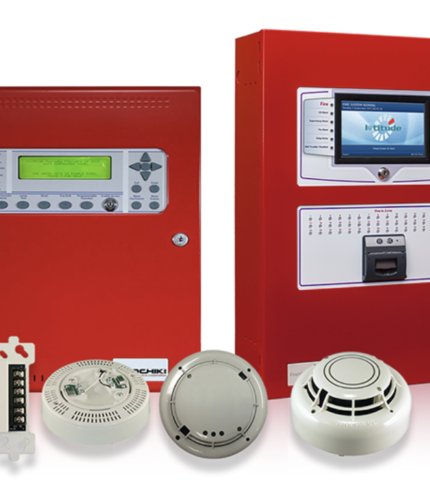
Addressable Fire Alarm System
Rated 0 out of 5
(0)
Highlights:
An addressable fire alarm system is one in which all fire and smoke detection devices in a system are connected and communicate both with each other and a central control monitoring location. This interconnectivity allows the control personnel to identify the location or “address” where the initial detection occurred. The information directs the emergency response team to pinpoint their efforts immediately to the precise location of the developing problem.
How Does an Addressable Fire Alarm System Work?
- Reliability of Addressable Fire Alarms Systems
- Testing and Monitoring Each Device
ADVANTAGES OF Addressable FIRE ALARM SYSTEMS
Quickly determine the location of a fire.
Specific actions can be programmed by the user.
Reduced likelihood and better handling of false alarms.
More reliability, less likely to lose connection.
Lower overall cost of wiring.
DISADVANTAGES OF Addressable FIRE ALARM SYSTEMS:
- Cost, not as competitively priced for smaller applications.
- Typically with an intelligent panel, your peripheral devices (i.e. smoke detectors, etc…) tend to be more expensive than conventional devices.
- This panel is computer like and at times there maybe issues caused by the firmware (panel software). However, this is not common and the advantages of intelligent panel far outweigh any of these firmware issues.
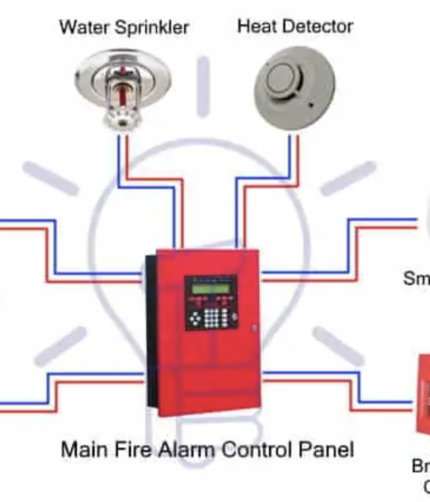
Conventional Fire Alarm System
Rated 0 out of 5
(0)
Highlights:
A conventional system employs one or more initiating circuits, connected to sensors (initiating devices) wired in parallel. These sensors are devised to decrease the circuits resistance when the environmental influence on any sensor exceeds a predetermined threshold.
Conventional fire alarms include:
- Small Schools
- Stores
- Restaurants
- Apartments
ADVANTAGES OF CONVENTIONAL FIRE ALARM SYSTEMS
Cost effective for small applications.
DISADVANTAGES OF CONVENTIONAL FIRE ALARM SYSTEMS:
- Cost, not competitively priced for larger systems.
- Detection of smoke or a fire is done by zone, which could be multiple areas rather than specifying a specific location. This could delay emergency responders from locating the fire.
- Conventional panels are often called “dumb” panels because of the inability to provide detail information, such as… Device locations.